
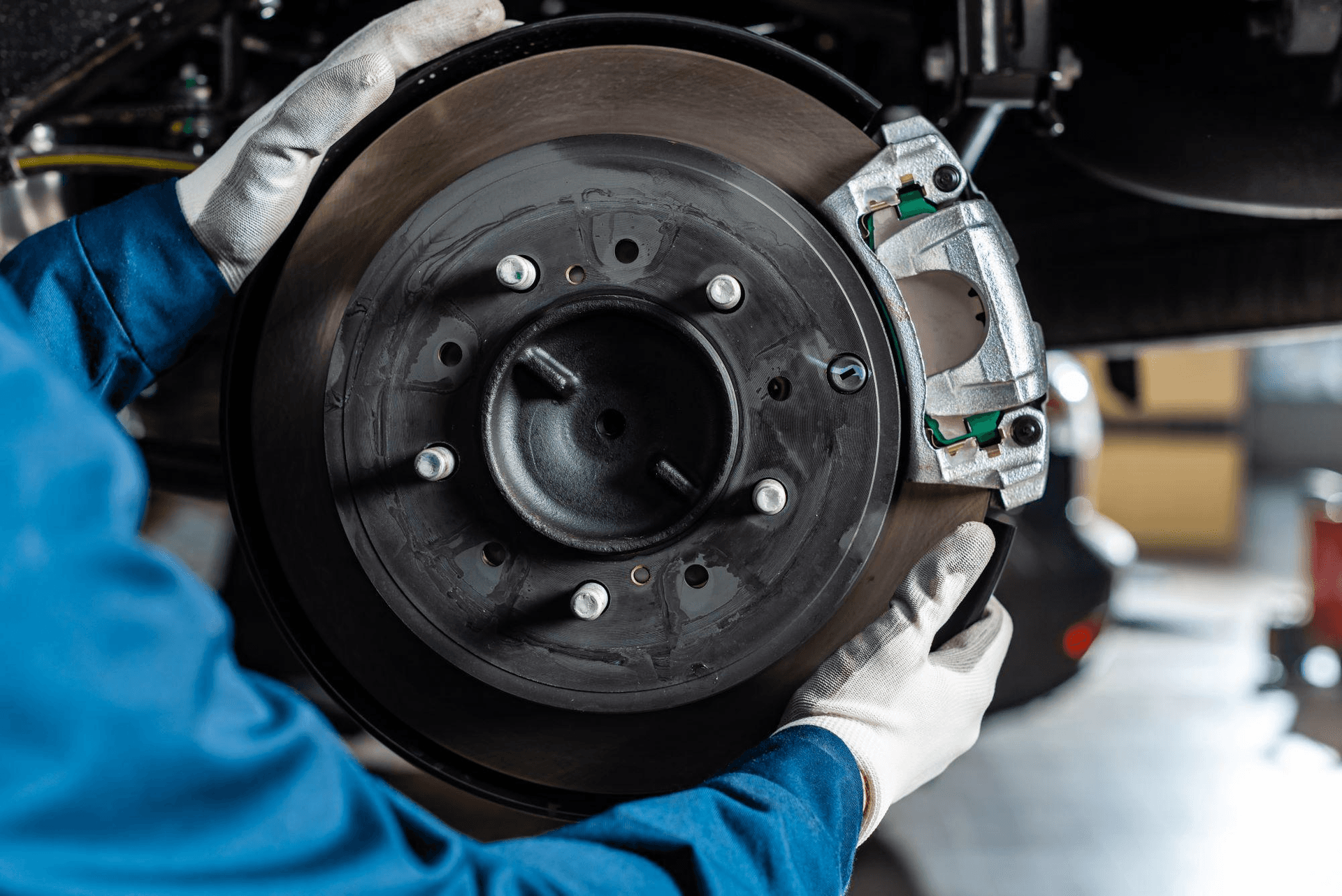
The honest answer to 'how long should my brake pads last' is somewhere between 20,000 and 70,000 miles - which is so wide it's basically useless. The real answer depends on what kind of driver you are, what you drive, and what roads you drive on. Detroit drivers fall on the shorter end of that range, and here's why.
Why Detroit driving is hard on brakes
Stop-and-go traffic is the single biggest factor in brake wear, and Detroit has plenty of it. The I-94 / I-75 / M-10 commute, downtown traffic during Lions and Tigers games, and just regular surface street driving all add up to a lot of starts and stops. Every stop converts kinetic energy into heat through the brake pads. The more stops per mile, the faster the pads wear.
Heavy vehicles wear pads faster. A loaded F-150 or full-size SUV is harder on brakes than a Civic. Vehicles that tow trailers wear pads even faster.
Driving style matters more than people realize. A driver who looks ahead and coasts to stops can get 60,000+ miles out of a set of pads. A driver who brakes hard at the last second every time gets 25,000 miles out of the same vehicle. Same pads, same roads.
Realistic Detroit brake pad lifespans
For a typical Detroit driver doing a mix of city and freeway driving: front pads usually last 30,000-45,000 miles. Rear pads usually last 40,000-60,000 miles because the front brakes do 60-70% of the stopping work.
Heavy commuters who do significant stop-and-go: front pads at 25,000-35,000 miles, rear pads at 35,000-50,000 miles.
Mostly-freeway drivers (cruise to work, light city driving): front pads can hit 50,000-70,000 miles, rear pads 60,000+.
Performance vehicles with aggressive pads (M-cars, AMG, Corvettes, etc): can be as low as 20,000 miles even with normal driving because the pads are designed for high heat.
Warning signs your pads are due
Squealing when you brake is the most common early warning. Modern brake pads have a small metal wear indicator that contacts the rotor and creates a high-pitched squeal when the pad is at about 25% remaining. This is a 'replace in the next month' warning, not an immediate emergency.
Grinding when you brake is an emergency. It means the pad material is gone and the metal backing plate is grinding directly on the rotor. Every stop is now damaging both the rotor and the caliper. Replace the same week - ideally the same day.
Pulsation through the brake pedal when stopping at higher speeds usually means warped rotors, often caused by riding pads too long.
Longer stopping distances - if your car feels like it takes more pedal pressure or more distance to stop than it used to, get the brakes inspected.
What brake replacement costs in Detroit
Front pads only (most common): $150-$280 at independent shops, $250-$400 at dealerships. The wider range reflects the difference between economy pads on a Camry and ceramic pads on a luxury SUV.
Front pads + rotors: $350-$600 at independents, $500-$900 at dealers. Rotor cost varies wildly by vehicle.
Full four-wheel brake job (pads + rotors): $700-$1,400. This is the right call when both axles need work and the rotors are below spec.
Calipers, hoses, fluid flush: usually add $100-$400 depending on what's needed. We tell you upfront so you can decide what to do now and what to defer.
Don't ignore the squeal
The single most expensive brake-related mistake is ignoring the wear indicator squeal. People convince themselves it's not that bad and put off the replacement for another 3,000-5,000 miles - by which point the pads have grounded down to the backing plate, scored the rotor beyond resurfacing, and turned a $200 pad job into a $600 pad + rotor + caliper rebuild.
If you hear it, schedule the inspection. It's free at our shop and takes 20 minutes.
Frequently Asked Questions
Do I need to replace front and rear pads at the same time?+
No. Front pads typically wear about twice as fast as rears, so it's common to do fronts twice for every rear replacement. We inspect both axles every visit and only recommend what's actually needed.
Are ceramic pads worth the extra cost?+
For most daily drivers, semi-metallic pads are fine and cost less. Ceramic pads produce less dust and last slightly longer but are more expensive. We'll tell you which is right for your vehicle and driving style.
How long can I drive on grinding brakes?+
Don't. Every stop is damaging the rotor and risking caliper damage. More importantly, your stopping distance is dramatically reduced. Replace the same week.
Hearing a squeal or grind when you brake? Get a free inspection at East Detroit Goodyear. We'll measure pad thickness, inspect rotors, and quote everything before any work. Call (313) 886-8462.
Call (313) 886-8462